Have you ever found yourself asking, “Why do I feel stuck?”

Your career is going well. You’ve accomplished a lot, taken on responsibilities, and worked hard to get where you are. From the outside, everything seems great. Yet, somewhere along the way, you start to wonder why you don’t feel as fulfilled as you thought you would. You know you’re capable of more, but you’re not quite sure what needs to change. Often, that uncertainty can be difficult to explain, especially when you can’t point to anything that is wrong.

You’re not alone. More importantly, you’re not without options.

In my experience, people rarely become stuck overnight. It usually happens gradually—one compromise, one distraction, or one postponed dream at a time, until one day you realize you’ve moved further away from the life you intended to build.

The encouraging news is that feeling stuck does not have to define your next chapter. It can be an opportunity to take an honest look at how you got here and what needs to change. Once you understand what is keeping you in place, you can course-correct and move forward with greater clarity.

The reasons are easier to see once you step back from the feeling itself.


Here are five common reasons you may feel stuck—and what you can start to do differently.

1. You’re Living on Autopilot

One of the biggest reasons people feel stuck is that they start to live by default rather than by design.

The routines that once served you become habits you stop to question. Days turn into weeks, weeks into months, and before long you’re moving through life without asking whether your daily choices still reflect who you are today.

Reflection: If I continue living exactly as I am today, where will I be a year from now?

If the answer doesn’t excite you, it may be time to take a different path. There are times when moving forward doesn’t require doing more but becoming more intentional about what deserves your time, energy, and attention.

2. Your Definition of Success Has Changed

Another common reason people feel stuck in life is that they’re still chasing their old definition of success.

Success isn’t static. What mattered to you a year ago may not matter a year from now. We feel stuck because we’re still chasing goals that belonged to an earlier version of ourselves.

As you grow, your values and priorities evolve, just as the seasons of your life change. You can achieve the promotion, build the business, reach the financial milestone, or accomplish the goal you once wanted and still feel unfulfilled. Why?

Because external achievement and inner fulfillment do not always move in the same direction.

Reflection: Instead of focusing on how to achieve more, ask yourself, “Does success still look the same to me?”

Getting unstuck often begins with redefining what success means in this season of your life.

3. You’re Confusing Activity With Progress

Busyness can create the illusion of progress while slowly pulling you away from what is important.

You can answer emails, attend meetings, solve problems, and check every box on your to-do list while neglecting what matters to you. That’s when activity becomes a distraction from the life you truly want.

Reflection: Before saying yes to your next commitment, consider: “What am I saying no to by saying yes?”

Every commitment costs something—your time, energy, focus, or attention. The right opportunity at the wrong time can still become a distraction.

If you’re constantly busy and still wondering how to move forward in life, it may be time to examine not just what you’re doing, but why you’re doing it.

4. Misalignment vs. Burnout: Why You’re Still Unfulfilled

Burnout is real. But not every feeling of exhaustion is burnout.

The World Health Organization defines burnout as an occupational phenomenon resulting from chronic workplace stress that has not been successfully managed. The American Psychological Association also provides resources on understanding and managing stress and its effects on well-being.

At the heart of what you’re experiencing may be something deeper than exhaustion: misalignment. Burnout can result from doing too much for too long without adequate recovery. Misalignment occurs when the way you’re living and spending your energy no longer reflects your values, strengths, priorities, or sense of purpose.

The distinction between exhaustion and misalignment matters. Rest can restore your energy, but it cannot address what is draining you if the way you’re living no longer reflects who you are.

Reflection: Am I tired because I need to recover, or because too much of my energy is going toward things that no longer matter to me?

If you’re beginning to question what gives your life meaning and direction, you may also find my guide, 4 Steps to Finding Your Purpose, helpful.

5. You’re Waiting for the Perfect Time: How to Get Unstuck Now

“I’ll start when I feel more confident.” “I need one more certification.” “I just need to figure everything out first.” Sound familiar?

Fear often disguises itself as preparation. The truth is, clarity does not necessarily precede action. It follows when you dare to take the first step. If you’re wondering how to get unstuck, stop waiting for the perfect moment and commit to one intentional step today. Small actions create momentum, and momentum in turn builds confidence.


moving-forward-with-clarity-and-purpose.jpg

moving-forward-with-clarity-and-purpose.jpg


The Alignment Check

Life moves quickly. Months become years. Without intentional reflection, it’s easy to keep climbing a ladder without asking whether it’s leaning against the right wall. Growth requires more than hard work. It requires honest reflection.

Take a few moments this week to reflect:

  • What part of my life feels most out of alignment?
  • What have I outgrown?
  • What decision have I been avoiding?
  • What would I pursue if fear wasn’t deciding for me?

Your progress isn’t determined by one perfect decision but by consistent, intentional ones.

Frequently Asked Questions


Why do I feel stuck in life even though I’m successful?

Success and fulfillment, though often conflated, are fundamentally distinct: success may open doors, but fulfillment gives life its meaning. You can achieve meaningful goals and still feel disconnected if your life no longer aligns with your values, strengths, or purpose.

Is it normal to feel stuck?

Yes. Most people experience seasons where they question their direction. Feeling stuck isn’t a sign of failure—it can be an invitation to pause, reflect, and realign.

How do I stop feeling stuck?


Final Thoughts

Feeling stuck isn’t the end of your story. It may be the signal that you’re ready for a new season of growth.

Don’t ignore that feeling. Pay attention to it. The greatest breakthrough doesn’t often come from working harder but from realigning your life with what feels true to you. One intentional decision today can change the direction of tomorrow.

Ready for Your Next Step?


If you’re feeling stuck and want greater clarity about your next season, coaching can help you identify what’s holding you back and create a practical plan to move forward with confidence.

Explore my coaching services or connect with me to start the conversation.


If the themes of identity, purpose, and alignment resonate with you, you can also explore my book, Becoming Golden: Reclaiming Identity, Purpose & Power in a Performance-Driven World.


Harness The Power of Failure

Harness The Power of Failure

Discover why fear of failure costs more than failure itself — and how to transform setbacks into strategy, unlock courage, and rise with clarity and confidence.

What if failure isn’t your enemy — but the fear of it is?

In today’s fast-moving world of leadership, entrepreneurship, and innovation, the greatest risk isn’t failing. It’s playing small because of fear.

  • The manager who plays it safe, knowing deep down the team is capable of more.

  • The parent who teaches caution instead of courage.

  • The professional who stays in a role that no longer serves them exchanging growth for comfort.

  • The entrepreneur who delays launching, waiting for “perfect” instead of building momentum.

Fear of failing doesn’t protect us — it shrinks us. And here’s the truth: the real failure isn’t in falling short. It’s in ignoring what you know deep down is calling you forward.

📊 Failure by Numbers : What Hesitation Really Costs

Fear feels invisible — but the numbers don’t lie.

  • 1 in 3 professionals admit the fear of failure has stopped them from pursuing a dream.

  • Employees lose an average of 5 hours per week second-guessing instead of executing.

  • Missed opportunities cost individuals and organizations billions globally every year.

Let’s put real numbers on it. Assume your time is valued at $75/hour and each missed client or opportunity is worth $1,500/month:

  • ⏳ Time Wasted: 3 hours of hesitation per week × $75/hour × 6 months = $5,400

  • 💼 Opportunities Missed: 1 client/month worth $1,500 × 6 months = $9,000

  • 💰 Total Fear Cost = $14,400 in just 6 months

👉 Fear of Failing isn’t just emotional. It’s financial, measurable, and draining.

When you combine wasted time and missed opportunities, the true cost of fear adds up fast. What could you do with that time, money, and momentum?

🧠 What Science Shows : How Your Brain Hijacks Decisions

Neuroscience confirms fear activates the amygdala — the brain’s survival center. It was essential for physical safety, but in today’s workplace it can misfire and hijack decisions.

The Goodnews? Research shows:

  • Naming your fear reduces its intensity and impact.

  • Taking small, bold actions begins rewiring confidence pathways.

👉 Translation: fear isn’t fixed. It can be rewired — and resilience can be intentionally built.

🌍 Global Lens: How Leaders Turn Fear Into Fuel


From Silicon Valley startups to billion-dollar brands, one truth keeps surfacing: the leaders who rise don’t avoid failure — they use it.

  • Thomas J. Watson Sr. (IBM) → “The fastest way to succeed is to double your failure rate.”

  • Rometty (IBM) → Championed “fail fast, learn faster” to drive innovation.

  • Ed Catmull (Pixar) → Built Braintrust meetings where early missteps became Oscar-winning films.

  • Sara Blakely (Spanx) → Credited her billion-dollar success to embracing failure as feedback.

  • Reed Hastings (Netflix) → “If you’re not failing, you’re not innovating enough.” That mindset turned a DVD-mail business into a global streaming giant.

Across industries, geographies, and boardrooms, the pattern is clear: failure fuels forward momentum. In tech, entrepreneurship, film, and corporate life, those who move forward despite fear create breakthroughs — while those who wait for perfect remain stuck.

🔑 Identity Shift: Moving From Safe to Aligned

Minimi

Fear of failure keeps high-potential people stuck — in roles they’ve outgrown, projects that drain them, or seasons that no longer fit. On paper, it looks “safe.” In reality, it costs clarity, courage, and growth.

The shift happens when you stop asking, “What’s safe?” and start asking, “What’s aligned?”

I’ve lived this: staying too long in a role that looked stable but starved me of purpose. The moment I chose alignment over fear, the doors that opened weren’t perfect — but they were mine.

👉 Reflection Prompt: Where are you choosing safety over alignment — and what would shift if you trusted yourself enough to move?

⚙️ Leadership Playbook: Tools to Use Now

1️⃣ The Courage Compass Step past fear with 3 quick moves:

  • Spot the mismatch → Where have you outgrown a role, project, or season?

  • Flip the lens → Ask: “If fear wasn’t in the equation, what bold step would I take?”

  • Move micro → Take one small action this week that honors alignment over fear.


2️⃣ The Resilience Reset When something falls short, turn it into strategy:

  • Acknowledge what happened vs. what you expected.

  • Analyze whether it was timing, effort, or approach.

  • Extract three lessons.

  • Adapt the method, not the mission.


3️⃣ The Decision Filter Cut through fear and bias with this simple matrix:

  • High probability + high impact → 🚀 Act fast.

  • High probability + low impact → 📝 Delegate or minimize.

  • Low probability + high impact → 🔍 Test small before scaling.

  • Low probability + low impact → ❌ Ignore it.


👉 Three tools. Simple, practical, immediate. Use them to shift from hesitation to momentum this week.

💡 Closing Thought

Failure isn’t the enemy — fear is. The leaders, professionals, and entrepreneurs who rise aren’t the ones who never stumble, but the ones who refuse to let fear decide their future.

If you take just one thing from this: measure what fear is costing you, reclaim your courage, and step forward anyway.

Because every bold move — in leadership, career, and life — begins with a decision: fear, or freedom?

👉 Start measuring it. Then master it.


📚 Sources: Harvard Business Review · Psychology Today · Deloitte · McKinsey · Stanford

✨ IEME IMPACT — powered by IEME Solutions Together, we rise with clarity, confidence & purpose.

Follow & share your voice: YouTube · Instagram · Facebook · Twitter / X · LinkedIn

Ready for your next breakthrough? → Book your Discovery Call Email: info@iemesolutions.com · Web: www.iemesolutions.com

The only thing that’s keeping you from getting what you want in life is you.
Your internal narrative shapes your reality. If you really believe it, then you can make it a reality. Fleshing out your ideas is really your first step in creating your dream future.

An intention is more than a wish—it’s a commitment to align your actions with your purpose. Each day presents an opportunity to move closer to the life you desire. By being mindful of your choices and staying connected to your “why,” you ensure that every step you take is meaningful and impactful.


Read more: 5 Steps to Unleashing Your Full Potential in Life

Do you have those big audacious dreams that excite you but scare you at the same time? Perhaps like Mother Teresa, you want to champion a just cause that could move humanity forward but for some reason you don’t know what your first step should look like, you are not alone. In this guide, we will  explore 5 essential steps that can help you navigate the path to self-actualization. These steps will provide you with the tools and strategies to overcome challenges, embrace opportunities, and create a life that truly reflects your values and aspirations.

The process to unleashing your full potential in life, is not a single event but rather a continuous path of self-discovery and intentional living. It is a transformative journey that involves recognizing and harnessing your inherent abilities, strengths, and talents to achieve your highest aspirations. It’s about pushing past your perceived limitations, overcoming self-doubt, and continuously striving for growth and self-improvement. By unlocking your full potential, you open the door to endless possibilities, both personally and professionally, thereby creating a life that is fulfilling.

Below are the five steps:

  • Believe in your Dream

“Believe in your dream” is a simple phrase, but it holds enormous power that can propel you to move from a place of self-discovery to self-actualization. Simply knowing what your purpose in life is, is not enough, you have to truly believe in it. When you truly believe in your dream, you are more likely to persist, stay motivated, take risks and stay committed.

Remember, your dream is a reflection of your hopes, aspirations, and potentials, so believe in yourself and your dreams. The journey may be challenging, but the rewards can be extraordinary. 

I encourage you to visualize your dream in your mind’s eye, close your eyes and picture the fulfilment of your dream. This makes it as vivid as possible. Replay that image as often as possible and it will become reality because your firm believe will swing you into action. When you conceptualize it in your mind, writing it down helps it crystallize. So we encourage you to keep a journal!

Give yourself the permission to pursue your God-given dream! Have a mindset shift and change the lens you see the world with if you need to. Drop those limiting beliefs and embrace your dreams!

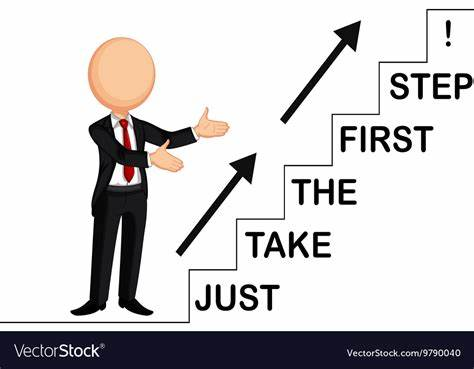
  • Take the first step

The journey of a thousand miles begins with a single step. No matter how daunting a task or goal may seem, the key to progress is to simply start. 

Amelia Earhart once said, “The most difficult thing is the decision to act, the rest is merely tenacity.”

The first step is the most important step; certain doors may not open unless you take the first step. Taking the first step unlocks certain capabilities within you, you may never know exist.

Here’s why taking the first step is so important:

It helps you Overcomes Inertia: It breaks through the resistance that often keeps us stuck. 

It helps you Build Momentum: Taking the first step gives you the impetus to keep going. Once you’ve started, it’s easier to keep going.

It helps Build Confidence: Taking action can boost your belief in your abilities and empowers you to forge ahead 

So, what is the first step you can take today towards your goals?  Remember you do not have to wait for the stars to align before you take the first step. Don’t overthink it. Just do it!

  •  Trust the Process

“Trust the process” is a powerful mantra that encourages faith in the journey of growth and development. It is about trusting that, when you persevere through tough times and stay consistent, things will work out as they are meant to, even when the path is not clear enough or the results are not immediate. As challenging as it may be to stay the course when the going gets tough, be rest assured that a new and improved you will be formed when you get on the other side. You come out fully equipped for what lies ahead.

Trusting the Process is important to help you build resilience and patience, reduce anxiety, fosters growth among other benefits.

Sometimes you may fumble and that’s okay. When that happens, I encourage you to find the courage to take a step back when needed, because you will be better for it. Choose not to stay in that spot of confusion. Like a catapult you may just need to pull back to launch forward.

  • Mistakes are bound to happen

Mistakes are a natural part of life. They are opportunities for growth and learning. Here’s why it’s important to embrace mistakes:

  • You become better prepared when you know mistakes are bound to happen. It helps you develop the buffer needed to go through life.
  • It becomes a Learning Experience: Mistakes provide valuable lessons that can help you avoid future mistakes.
  • It helps Build Resilience: Overcoming mistakes can strengthen your resilience and determination.
  • It helps with Self-Improvement: Mistakes can motivate you to improve your skills and knowledge.


  • Connect with others

Building strong relationships with others is essential for support and accountability. Take advantage of those opportunities out there, It also helps you with your physical and mental wellbeing when you stay connected. Providing you the support needed when the going gets tough. Having people to bounce ideas off of can be rewarding, You find others also going through similar journeys like you which can provide strength and accountability

Here are some ways to connect with others:

  • Join Groups: Participate in interest groups, meetups, organizations that align with your purpose.
  • Consider Volunteering: Giving back to your community can be a learning experience providing you with the opportunity to learn as you go
  • Social Media: Join online communities and connect with people everywhere in the world

Remember, the process to unleashing your full potential is not a destination but a lifelong process. Be patient with yourself, stay open to new possibilities, and enjoy the journey of self actualization. With dedication and perseverance, you can embrace your purpose and live a life filled with meaning and fulfillment.

There is no shortcut to success, there are no elevators on the way up, you have to take the stairs!

For related topics subscribe to our

YouTube channel: https://www.youtube.com/@nwakaegoegwuenu